
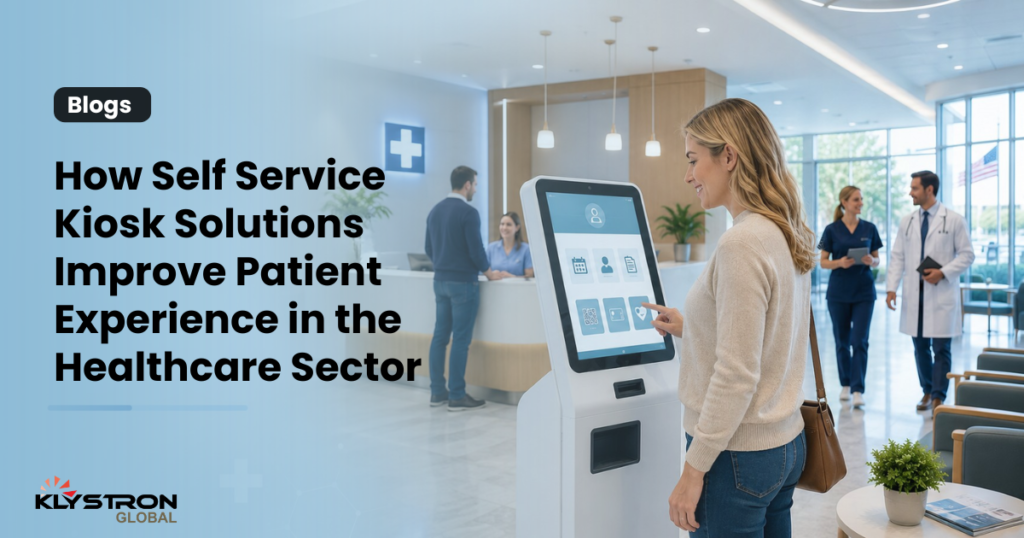
A patient’s experience begins long before they meet a doctor. Long registration queues, repetitive paperwork, and delayed check-ins can create frustration before care even starts.
As healthcare providers across the USA accelerate digital transformation, self service kiosk solutions are becoming an essential part of modern patient care. By simplifying check-ins, automating routine administrative tasks, and reducing waiting times, these intelligent kiosks help hospitals and clinics deliver faster, more convenient, and patient-centric experiences.
In this blog, we’ll explore how healthcare kiosk solutions are reshaping the sector, improving operational efficiency, and setting a new standard for patient engagement.
Patients today expect healthcare services to match the convenience they experience in banking, retail, and travel.
Modern healthcare organizations are focusing on experiences that are:
Improving patient experience not only increases satisfaction but also contributes to better operational performance by reducing waiting times, minimizing administrative bottlenecks, and enabling healthcare staff to focus more on patient care.
Self service kiosk solutions are interactive touchscreen systems that allow patients to complete various administrative tasks independently without relying on reception staff.
Depending on the healthcare facility, these kiosks can support:
Integrated with hospital management systems, these kiosks automate routine processes while ensuring accurate data capture and a seamless patient journey.
Before implementing digital kiosks, many healthcare providers struggle with operational inefficiencies that directly affect patient satisfaction.
Manual registration often creates bottlenecks during peak hours, leading to overcrowded waiting areas.
Front-desk teams spend significant time entering patient information, updating records, and answering routine queries.
Traditional forms increase the risk of incomplete information, manual errors, and slower document processing.
Repeatedly filling out the same information during every visit can negatively impact the overall healthcare experience.
Administrative staff often manage repetitive tasks instead of focusing on patients requiring personal assistance.
Patients can quickly confirm their arrival, verify personal details, and complete the check-in process without waiting in long reception queues.
Healthcare kiosks enable patients to book new appointments, modify existing schedules, or confirm upcoming visits directly from the touchscreen interface.
Instead of manually reviewing insurance documents, patients can securely scan their insurance cards, allowing the system to retrieve and validate information before treatment begins.
Integrated payment functionality allows patients to settle consultation fees, outstanding balances, or co-payments using multiple payment methods, making the billing process faster and more convenient.
Rather than relying on manual queue systems, kiosks automatically generate digital queue numbers and guide patients through their visit, helping healthcare facilities improve patient flow.
Patients can upload identification documents, update healthcare information, complete consent forms, or verify personal details electronically, reducing paperwork and improving data accuracy.
Large healthcare campuses can often be difficult to navigate. Interactive wayfinding features help patients locate departments, consultation rooms, laboratories, pharmacies, and other facilities with ease.
Healthcare kiosks can also display wellness information, appointment instructions, preventive healthcare tips, and post-visit surveys, helping providers engage patients beyond administrative tasks.
Choosing the right kiosk in USA involves more than selecting a touchscreen device. Modern healthcare kiosks incorporate intelligent features that enhance usability, accessibility, and long-term reliability.
Simple and intuitive interfaces allow patients of all age groups to complete tasks with minimal assistance.
Support for credit cards, QR code payments, contactless NFC transactions, and digital wallets provides greater convenience during payment.
Healthcare providers serve increasingly diverse communities. Multiple language options help ensure patients can navigate the system confidently.
Integrated scanners simplify the capture of insurance cards, identification documents, and healthcare records without manual intervention.
Built-in thermal printers instantly generate payment receipts, appointment confirmations, prescriptions, or queue tickets whenever required.
Healthcare IT teams can monitor kiosk performance, deploy software updates, and diagnose issues remotely, minimizing downtime across multiple locations.
Unlike retail or hospitality environments, healthcare facilities require technology that aligns with clinical workflows, strict operational standards, and continuous service availability.
Purpose-built self service kiosk solutions can be customized to integrate with existing healthcare ecosystems, including:
This integration creates a unified digital workflow, reducing duplicate data entry and improving operational efficiency across departments.
For Patients | For Healthcare Providers |
Shorter waiting times | Reduced administrative workload |
Faster registration | Improved operational efficiency |
Contactless service options | Lower manual data entry errors |
Easier appointment management | Better patient flow management |
Convenient digital payments | Optimized staff productivity |
Improved accessibility | Reduced paperwork and printing costs |
Greater control over healthcare interactions | Higher patient satisfaction scores |
Successful kiosk implementation requires more than quality hardware. It requires a solution designed around your operational goals and patient experience.
Klystron Global delivers custom self service kiosk solutions that can be tailored to the unique needs of hospitals, clinics, diagnostic centers, and healthcare networks.
Our solutions offer:
The future of healthcare isn’t just about advanced treatments—it’s about delivering a seamless patient experience from the very first interaction. By implementing intelligent self service kiosk solutions, healthcare providers can simplify patient check-ins, automate routine processes, improve data accuracy, and create faster, more convenient healthcare journeys.
Whether you’re operating a private clinic, specialty medical center, or a multi-location hospital network, investing in a smart self service kiosk solution is a strategic step toward improving patient engagement while optimizing day-to-day operations.
At Klystron Global, we design and deploy fully customizable healthcare kiosk solutions that integrate seamlessly with your existing hospital systems, helping you create faster, smarter, and more patient-centric experiences.
Get in touch with our experts today to discover how our kiosk solutions can help your healthcare organization improve patient satisfaction, increase operational efficiency, and accelerate your digital transformation.
Healthcare providers can automate services such as patient registration, appointment scheduling, check-in and check-out, insurance verification, bill payments, prescription requests, patient information updates, and document submission.
Yes. Modern healthcare kiosk solutions can integrate with Hospital Information Systems (HIS), Electronic Health Records (EHR), practice management systems, CRM platforms, payment gateways, and other healthcare applications to ensure seamless and secure data exchange.
Healthcare organizations should evaluate factors such as healthcare industry expertise, customization capabilities, data security, system integration, scalability, accessibility, regulatory compliance, and ongoing technical support.
Self-service kiosks connect physical healthcare facilities with digital services by automating routine processes, reducing manual work, improving patient flow, and providing a faster and more convenient patient experience.
Self-service kiosks are ideal for hospitals, clinics, diagnostic centers, specialty healthcare facilities, outpatient centers, and other healthcare organizations looking to improve patient experience, streamline front-desk operations, reduce waiting times, and accelerate digital transformation.
Empowering businesses with innovative digital transformation for future success
Klystron, Inc.
3020 Bernal Ave, Ste 110-404
Pleasanton, CA 94566
USA | UAE | Bahrain | Oman | India
Email: sales.us@klystronglobal.com
Phone: +1 925 469 8820